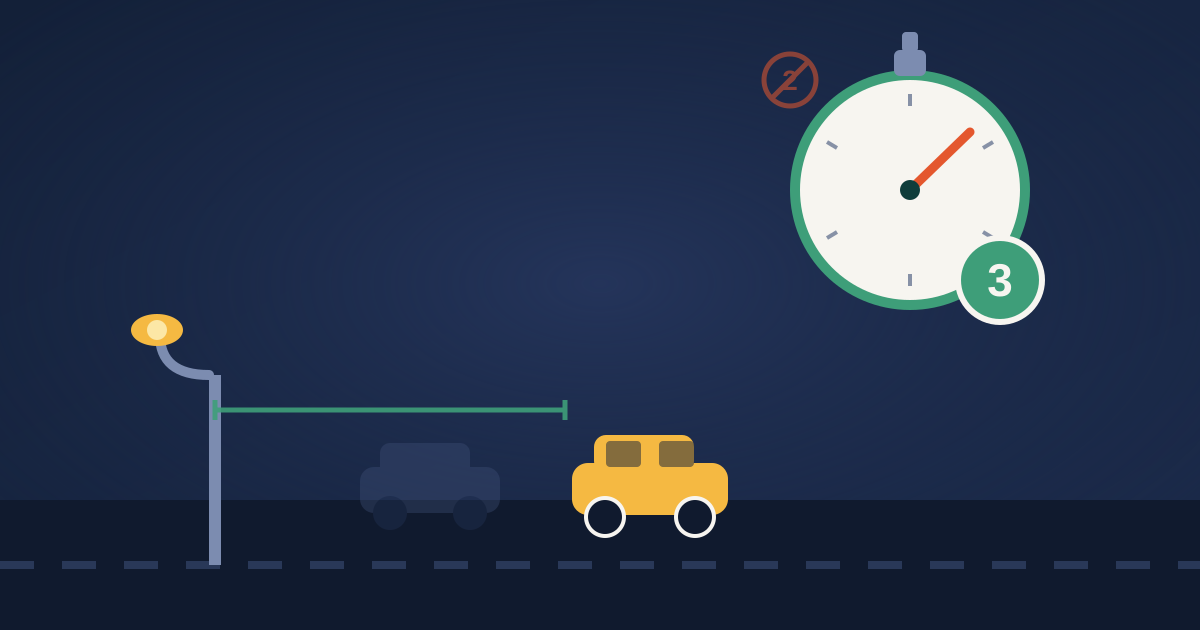
If you learned to drive using an older copy of the Highway Code or you’re studying from notes a friend passed down there’s a change in the 2026 edition of the Basic Theory of Driving handbook that could cost you a mark on test day if you miss it: the safe following distance guidance has moved from 2 seconds to 3 seconds.
It’s a small wording change, but it’s exactly the kind of update that trips up candidates who assume the fundamentals never move. Here’s what changed, why, and how to make sure your revision reflects it.
What the Handbook Actually Says Now
The Traffic Police’s Code of Conduct on the Road section of the handbook now instructs drivers to use a “three second rule” to judge a safe gap from the vehicle in front, explicitly flagged as the update to what was previously taught as the two second rule. The technique itself hasn’t changed you still pick a fixed point at the roadside, like a lamp post, and start counting from the moment the vehicle ahead of you passes it.
How to Apply the 3 Second Rule
- Choose a stationary reference point ahead a lamp post, signboard, or road marking works well.
- The instant the car in front of you passes that point, start counting: “one thousand and one, one thousand and two, one thousand and three.”
- If your own vehicle reaches the same point before you finish counting, you’re following too closely and need to increase your gap.
The extra second matters more than it sounds it accounts for reaction time plus a longer stopping distance, which becomes especially relevant in wet weather or heavier traffic, both very real conditions on Singapore roads.
Why This Matters for BTT and FTT Candidates
- BTT candidates are tested directly on Highway Code content, and following distance questions are a recurring category. If your study materials or a practice app haven’t been refreshed for 2026, you could be memorising the wrong number without realising it.
- FTT candidates face scenario based questions that test judgement, not just recall a question describing a following distance now needs to be evaluated against the 3 second standard, not the 2 second one you may have learned earlier.
- Anyone who studied months ago and paused before booking should specifically double check this topic, since it’s one of the easiest changes to miss if you’re relying on older notes or a printed guide bought before the update.
A Quick Way to Check Your Own Material
If you’re not sure whether your current study source reflects the update, search it for the word “second” in the context of following distance. Older material will say “two second rule” with no further note; the current handbook explicitly labels it as the updated version of the old rule, which is a useful tell that you’re looking at 2026 current content.
Don’t Let an Outdated Detail Cost You a Pass
Highway Code updates like this one are exactly why cramming from a static PDF or a hand me down notebook is riskier than it looks a single overlooked line can be the difference between a pass and a retake. If you’re preparing for your BTT, make sure whatever you’re studying from has actually been updated for the current handbook, not just labelled “2026” without a real revision behind it.
The Basic Theory Test SG app is kept in sync with the current Traffic Police handbook, so questions like this one reflect what’s actually being tested today, not what was taught a few editions ago. Download it for Android or iOS and make sure your revision is current before you book your test.